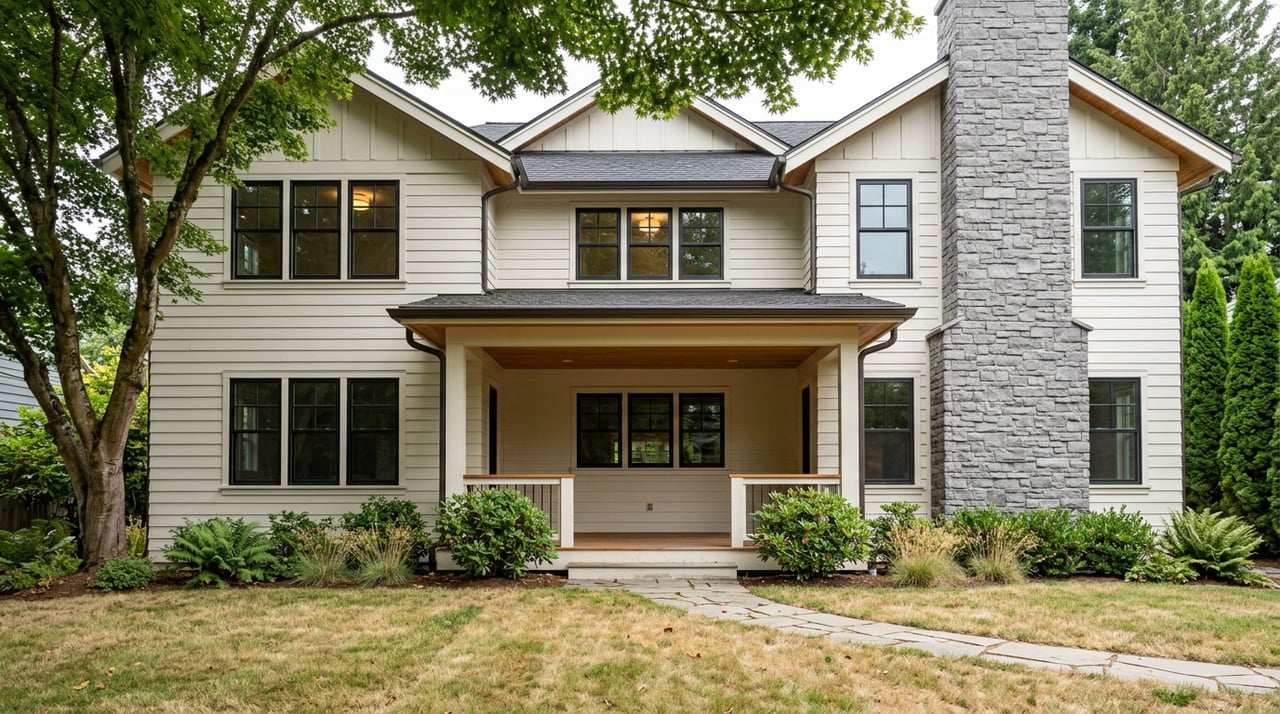
Pull the Ridgefield market up on any portal and you get a clean number: a median sale price of $650,000 over the three months ending May 2026, up 7.4% year over year, with homes closing in an average of 52 days. Now pull the new-construction filter. As of mid-June 2026, there are 100 newly built homes for sale in Ridgefield at a median list price of $703,000, with the same 54-day pace and Sekisui House PNW listing agents on much of the inventory. Those two data points describe one market, not two. And the resale seller who prices against the wrong one is the seller whose listing sits at day 80 with a price reduction on the horizon.
The thesis of this piece is narrow. In Ridgefield in 2026, a builder's list price is a partial fiction. The real competitor to your resale is the builder's incentive stack, and it is worth $30,000 to $50,000 that will never appear in an MLS comp. Price your home against the sticker and you have already lost.
The comp trap that costs Ridgefield sellers weeks on market
Country Broker's May 2026 read on Ridgefield describes a "balanced-to-soft market where correctly priced properties move and overpriced listings accumulate DOM," with average days on market of 112 across the search area and $381 per square foot on median list. That average absorbs a lot of variation, but the mechanism underneath it is specific: new production builders are compressing DOM at the lower price points while resale that mimics builder pricing sits.
Here is why. When a national builder discounts a home in a community like Lennar's Ridgefield Heights, the incentive rarely shows up as a list-price cut. Doing that would drag down the appraisal comps for every other home the builder needs to close in the same subdivision. Instead, the discount is routed through the affiliated lender and the design studio: a 3-2-1 rate buydown worth $20,000 to $35,000, $25,000 to $45,000 in design credits, and $10,000 to $15,000 in closing-cost credits are typical of the 2026 Lennar-tier stack, according to industry reporting on new-construction incentives. Add a trade-in pitch through the builder's Opendoor partnership and the effective spread grows again.
The MLS records the sale price. It does not record the 4.99% mortgage the buyer walked away with in a 6.75% market, or the $30,000 of quartz and flooring the buyer never wrote a check for. When your agent pulls new-construction sold comps and shows you the average, that average is inflated by every dollar of concession that never touched the purchase price. Price your resale to those comps and you are asking a buyer to pay full price for a used product while the builder next door effectively sells the equivalent home for tens of thousands less in monthly-payment terms.
What $703,000 actually costs a Ridgefield buyer
Run the payment math on a $703,000 new build at Ridgefield Heights with the builder's incentive stack. A 20% down loan of $562,400 at a builder-bought-down 4.99% carries a principal and interest payment near $3,015 a month. The same buyer looking at a resale listed at $650,000 with a market-rate 6.75% loan of $520,000 pays about $3,372. The resale is $53,000 cheaper on paper and $357 a month more expensive to own. Over a five-year hold, that gap is worth roughly $21,000 in cash flow before the resale seller's price advantage even begins to matter.
That is the ceiling a Ridgefield resale seller has to price under, and it does not care what the citywide median is. It also explains the Redfin migration signal on Ridgefield: Seattle is the top inbound search origin, followed by Eugene and Los Angeles. Those are relocation buyers running spreadsheets. They are not sentimental about mature landscaping unless the math works first.
The four things a builder cannot put in an incentive package
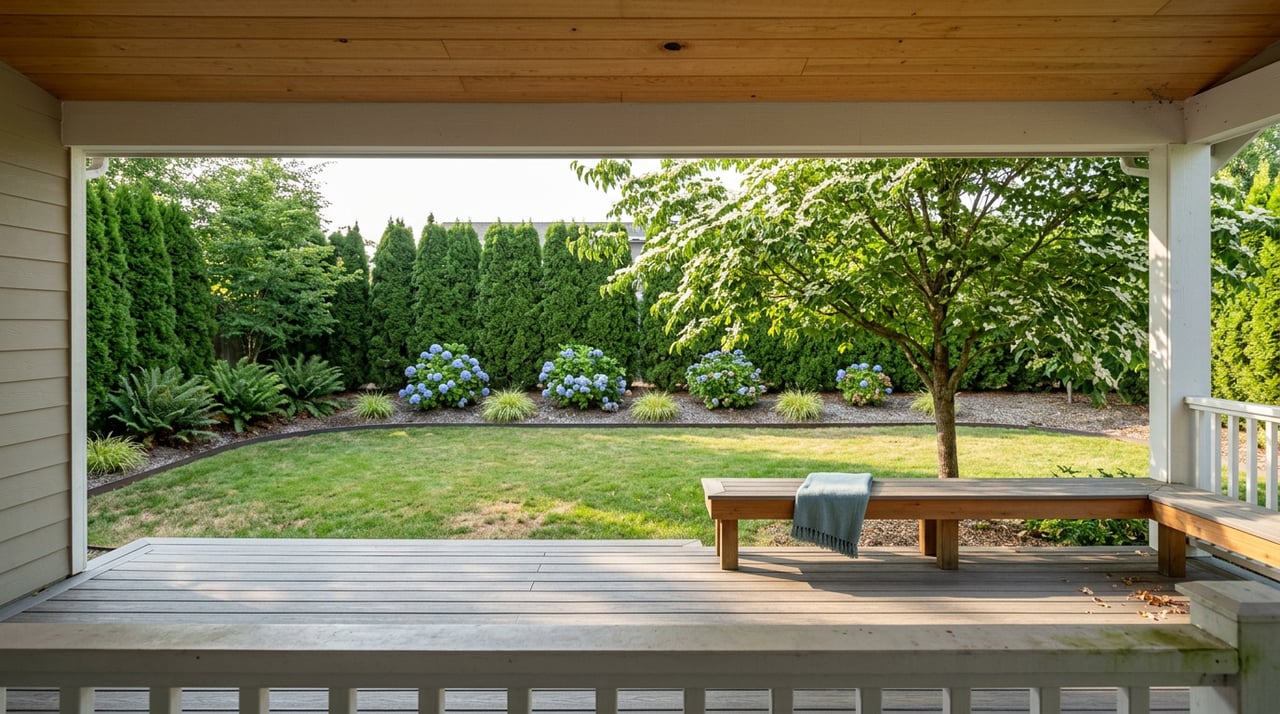
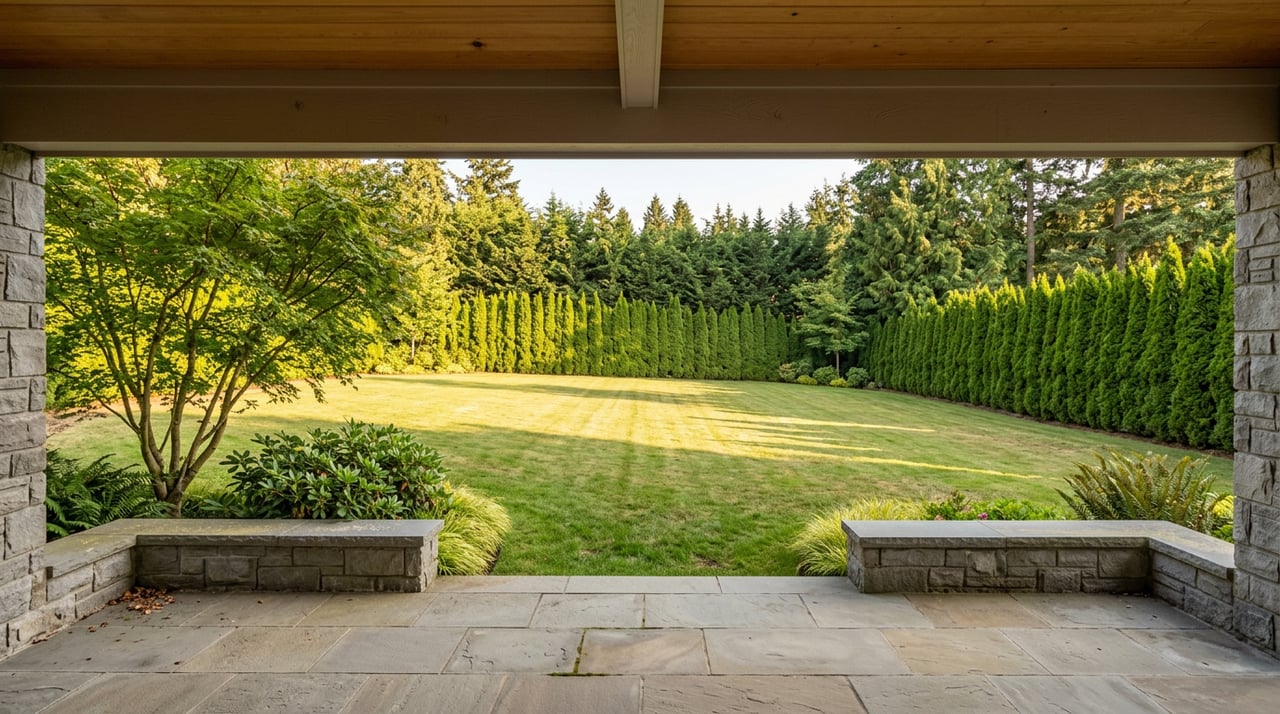
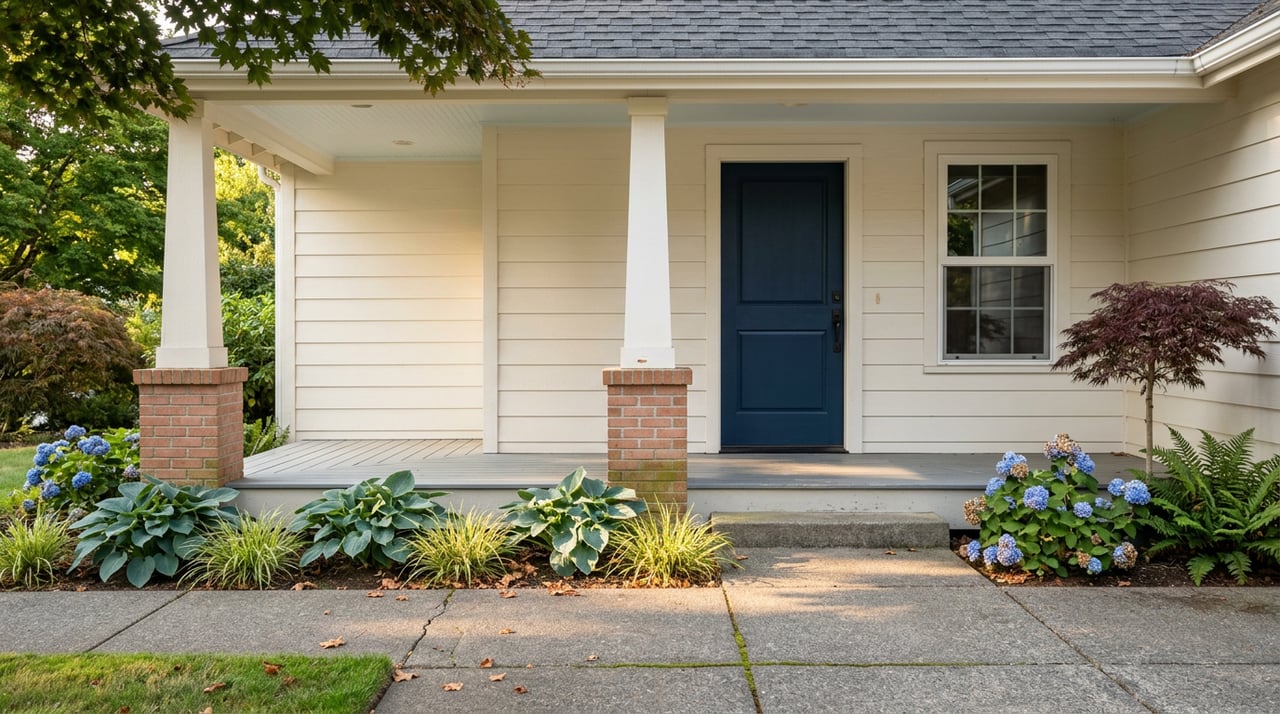
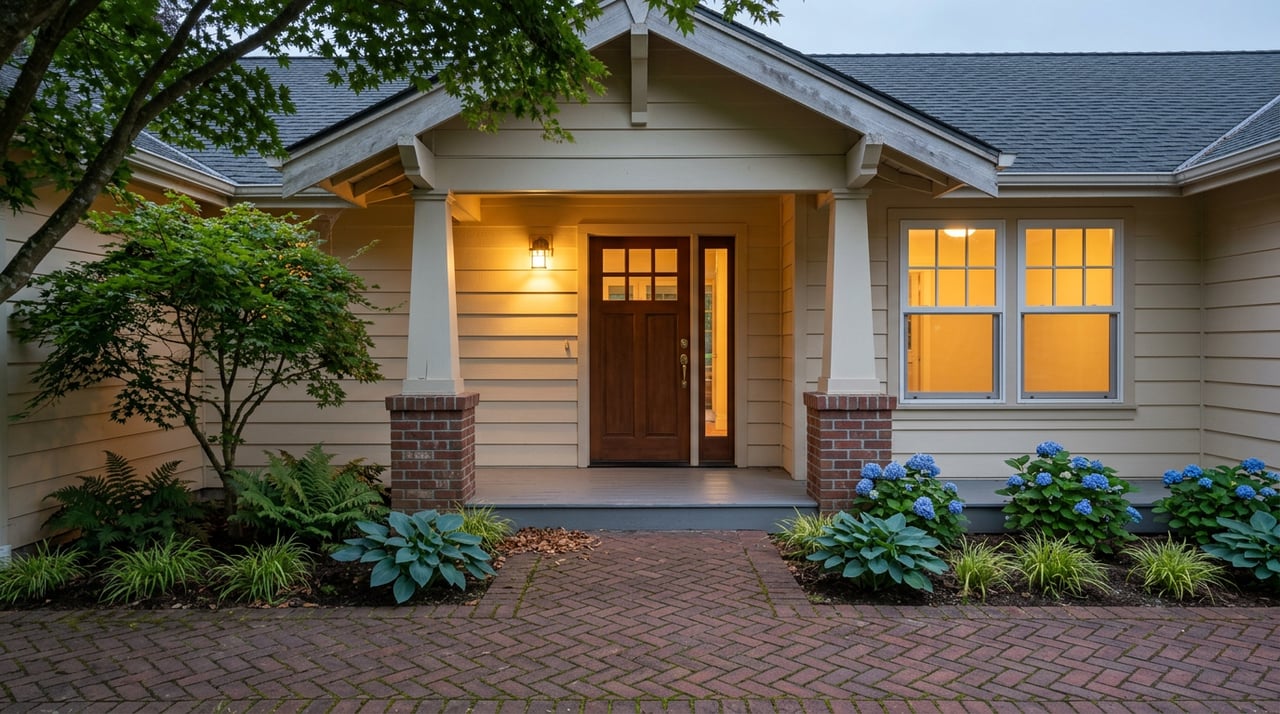
The resale seller who understands the incentive stack can stop trying to compete on it. Money is the wrong axis. The builder controls the money axis. The axes a resale controls are the ones a spec home in Heron Ridge or Knox & Abrams Acre Tracts cannot buy back:
- A mature lot with trees that took 20 years to grow and cannot be trucked in
- A position inside Ridgefield the current builder pipeline is not touching, particularly the north and east edges where 1-to-10-acre country properties sit and lots adjacent to the Ridgefield National Wildlife Refuge command view premiums
- A settled block with established landscaping on the neighboring parcels, not a construction fence two doors down
- A finished basement, a shop, a detached studio, or any square footage the builder's floor plan does not offer at the same price point
Every one of those becomes a marketing point in the listing description, in the video tour, and in the private remarks the buyer's agent reads. None of them show up in a new-construction feature sheet. This is where boutique presentation earns its fee. Anyone can list a house. The question is whether the listing tells the buyer, in the first ten seconds, what the builder next door literally cannot sell them.
Form 17 is a positioning document, not a compliance chore
Washington's Real Property Transfer Disclosure Statement, Form 17, is required under RCW 64.06.020 on almost every residential resale. The form is six pages, seven categories, and is delivered no later than five business days after mutual acceptance. The buyer then has three business days to rescind. Most sellers treat it as paperwork. The Ridgefield seller competing against new construction should treat it as a marketing asset.
There is a statutory asymmetry here that most sellers never see, buried in subsection (2) of the statute:
"If the disclosure statement is being completed for new construction which has never been occupied, the disclosure statement is not required to contain and the seller is not required to complete the questions listed in item 4."
Item 4 is the Structural section. In practice, a builder selling new construction in Ridgefield delivers a Form 17 with the structural questions blank. A resale seller delivers a Form 17 that answers them. Handled correctly, that is not a disadvantage. It is proof of a systems history the new build cannot yet offer, because it does not have one. A 12-year-old home in Ridgefield with a documented roof age, a serviced HVAC, a known water heater install date, and receipts attached to the disclosure is telling the buyer something a spec home cannot: this house has already been through the shakedown period, and here is the record.
The legal mechanics reward proactive disclosure. As one Washington practitioner puts it, "By disclosing a condition, the seller shifts the burden of investigation to the buyer under Washington law." Silence is the risk position. Full disclosure with records attached is the defensive position and the marketing position at the same time.
Two Form 17 mechanics matter for the pricing timeline. First, the standard is "actual knowledge," so a pre-listing inspection is a strategic choice, not a default. Order one and everything in the report becomes actual knowledge the seller must disclose. Second, under RCW 64.06.040 the duty to amend the disclosure triggers a fresh three-business-day rescission window if the seller learns of new information from a non-buyer source before closing. Handle amendments cleanly or a late structural surprise resets the buyer's out.
A pricing sequence for the 52-day window
The Ridgefield resale seller has roughly 52 days on average to close before the market starts treating the listing as stale. That is the operating budget. Everything below is written against it.
- Pull two comp sets, not one. The first is resale-only within a two-mile radius, closed in the last 90 days, adjusted for lot size and condition. The second is new-construction closed in the same window with a written note on any incentive concessions your agent can confirm through the buyer's-agent channel. Price against the resale set. Use the new-construction set only to understand the ceiling the builder is defending.
- Set list price inside the first-week search brackets on the major portals so the listing surfaces to buyers filtering at $625,000, $650,000, and $675,000 rather than sitting one dollar above a bracket.
- Complete Form 17 with attachments before the listing goes live. Roof age, HVAC service records, water heater install date, any permit history from the Ridgefield building department, HOA documents in full. Deliver at offer, not at mutual acceptance.
- Decide on the pre-inspection question deliberately. On homes older than 15 years the pre-inspection often shortens the transaction. On homes under 10 years it frequently creates disclosable actual knowledge without a corresponding buyer-side benefit.
- Set the price-reduction trigger at day 21, not day 45. In a market averaging 52 days with a rising listing count reported at plus-20.9% by regional analysts in spring 2026, waiting until day 45 to react means reacting after the first buyer wave has moved on.
FAQ
Should I offer to pay closing costs to match a builder incentive? Sometimes, and only for the last mile. A $10,000 closing-cost credit from a resale seller is roughly the price of two weeks of additional days on market at the median. If your listing has drawn strong showings but stalled at the offer stage, a targeted credit is cheaper than a price reduction of the same headline value because it protects the appraisal comp for your neighbors. Trying to match a full builder rate buydown out of seller proceeds rarely pencils.
Does the new-construction exemption on Form 17 mean I should worry my resale looks riskier? The opposite, once framed correctly. The exemption exists because a never-occupied home has no operational history to disclose. Your resale does, and a complete Structural section with attached service records is a positive signal to a relocation buyer who has been reading spec-home brochures for six weeks.
How does the Ridgefield inventory split affect my strategy? Country Broker's read of the local inventory identifies three categories: suburban homes in planned subdivisions built late-1990s to present, country homes on 1-to-10 acres on the northern and eastern edges, and luxury and custom estates including properties adjacent to the Ridgefield National Wildlife Refuge. New construction is concentrated in the first category. If your home sits in the second or third, you are competing in a market where the builder pipeline is not the primary comparable, and your pricing should reflect a scarcity premium rather than a builder-adjusted discount.
If you are weighing a Ridgefield listing in the second half of 2026, the difference between a 21-day sale and a 90-day price-reduction cycle is almost never the house itself. It is the pricing and positioning decisions made in the two weeks before the sign goes in the ground. Oxford Street Partners works through that sequence with sellers across Clark County and would welcome a conversation about your property. Book a Consultation.