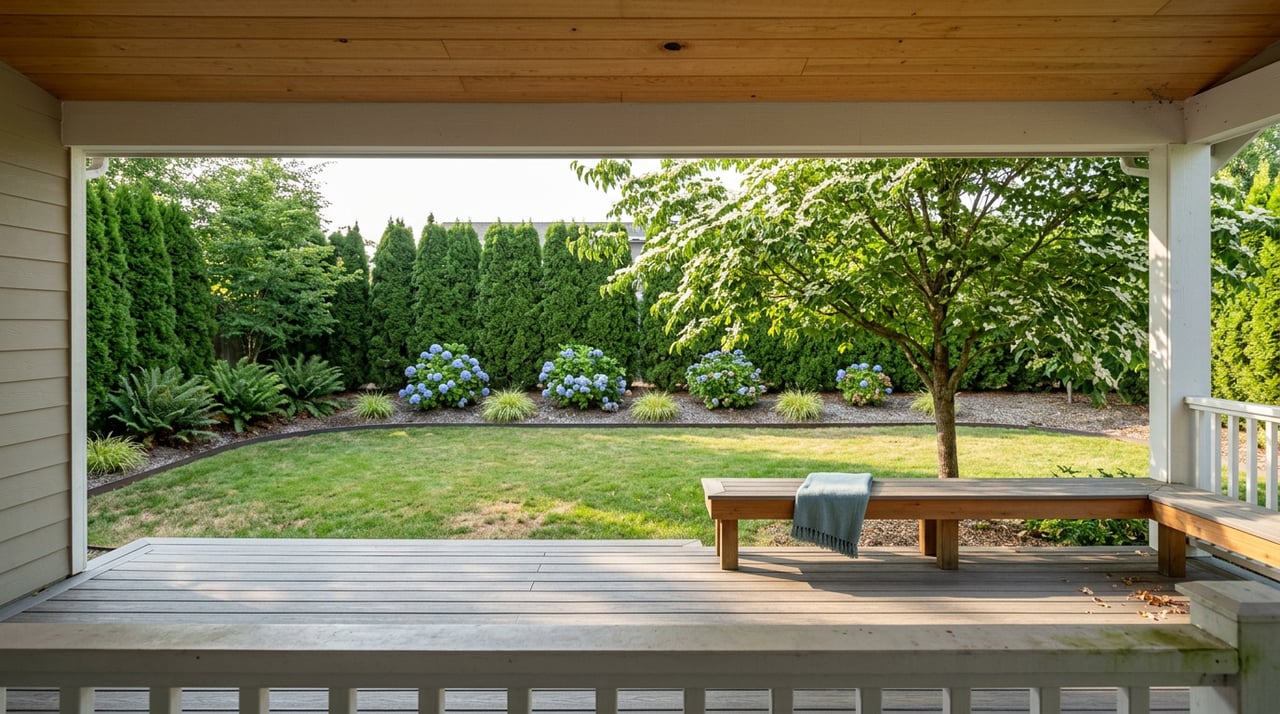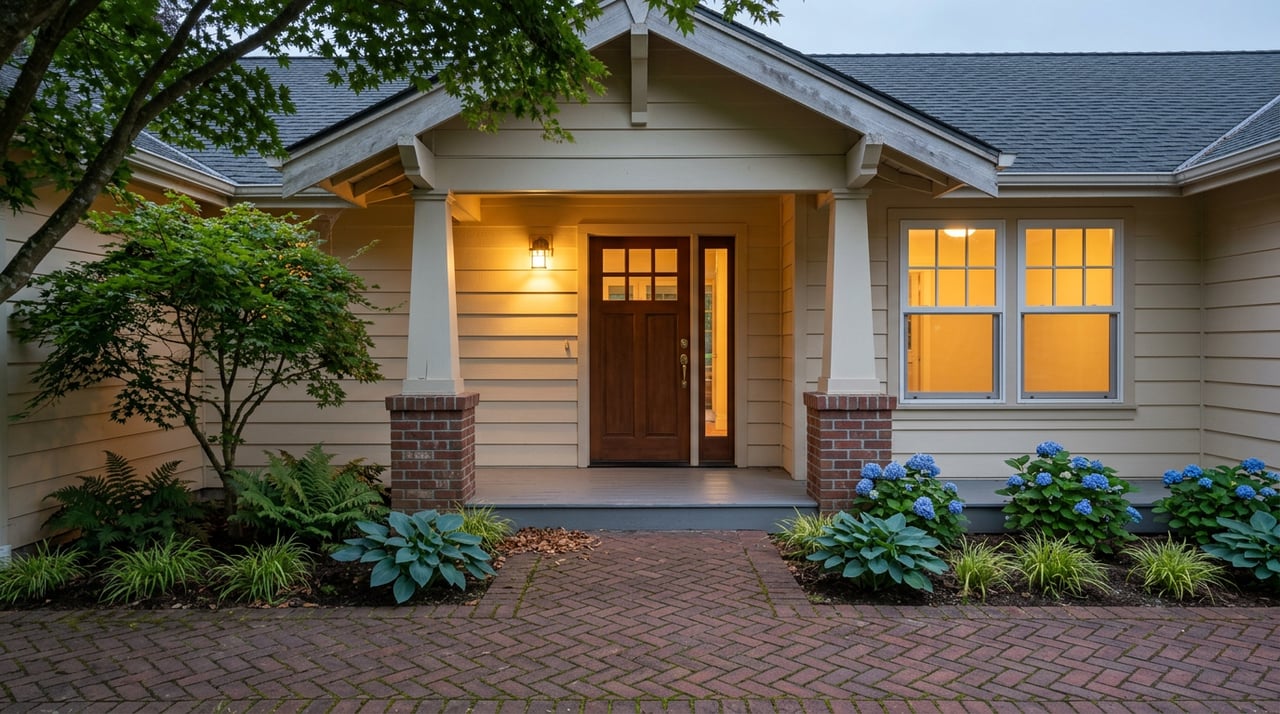
A buyer we spoke with this spring had written three offers in Fisher's Landing and lost all three. She was frustrated because her budget was well above the neighborhood median she had seen on a national portal. The problem was not her budget. The problem was that she was writing offers in the wrong submarket without knowing there were submarkets to choose between.
"Fisher's Landing" is the label the portals hand you. The MLS, the tax rolls, and the covenants underneath it tell a more useful story: at least three distinct products share the name, and their price behavior runs in opposite directions once you look past the headline number.
The label conceals three products
The southeast quadrant of Vancouver that most people call Fisher's Landing is really a stack of separately governed communities that happened to grow together off SE 164th and SR-14. The three that matter for a buyer comparing options are Fisher's Landing East, the Village at Fisher's Landing, and the attached-home pocket around Fisher's Creek and Hiddenbrook.
Each has its own governance, its own housing stock vintage, and its own buyer profile. Only one of them is a homeowners association in the strict sense. The Village at Fisher's Landing Neighborhood Association describes itself as a City of Vancouver neighborhood association established in 1993, organized as a 501(c)(4), not an HOA. The Northfield at Fisher's Landing community, by contrast, is a conventional HOA with quarterly dues and owner-occupancy language on file. Fisher's Creek, per the city's own neighborhood action plan, is zoned R-9 single-family with roughly 700 homes bounded by 34th Street, 172nd Avenue, 192nd Avenue, and SR-14, and has no rental apartments within its lines.
Three governance models, three price stories.
The inversion the median hides
The citywide Vancouver number is the one most buyers anchor to. In June 2026, Vancouver homes closed at a median of about $565,000 across 1,896 transactions, with a typical time on market of 52 days. Redfin's rolling three-month view through May 2026 put the citywide median closer to $490,000 at 20 days on market. Those figures describe Vancouver. They do not describe Fisher's Landing, and they especially do not describe any one submarket inside it.
Here is the comparison that changes the decision:
| Submarket | Recent median | $/sqft | Typical days on market |
|---|---|---|---|
| Fisher's Landing East | ~$549,000 (Aug 2025) | ~$333 | 15–20 |
| Village at Fisher's Landing | ~$825,000 (Mar 2026) | ~$272 | 41–90 |
| Vancouver WA citywide | ~$490K–$565K (Q2 2026) | ~$296–$310 | 20–52 |
Read the middle column, not the first. The submarket with the higher absolute price sells at the lower per-foot price. The submarket with the lower absolute price commands the per-foot premium. The Village's headline number is bigger because the houses are bigger and sit on planned lots. The east-side homes cost less in total because they are smaller, but each square foot of them is roughly 22 percent more expensive than a square foot inside the Village.
That is the market fact most Fisher's Landing buyers do not hold coming in. Once they do, the offer strategy changes.
What the Village's covenants actually price in
The Village at Fisher's Landing is often described in third-party guides as a 16,000-lot planned community governed by a 57-page set of covenants, conditions, and restrictions. Homes across the Village typically range from about 1,700 to 1,900 square feet with grassy front lawns, generous driveways, and a minimum-tree requirement written into the CC&Rs. A five-foot cement wall runs along SE 34th and SE 164th.
The covenants do more than shape landscaping. Local practitioners familiar with the community have observed that several of the Village's sub-associations restrict rentals, which is one reason the housing stock reads as owner-occupied and consistently maintained. Northfield at Fisher's Landing, adjacent and often bundled into the same buyer search, carries an explicit owner-occupancy rule alongside its $84 quarterly dues and a $125 transfer fee at closing.
For a buyer, that translates into a specific set of trade-offs worth pricing before writing an offer:
- Rental income is off the table in most of the Village's sub-associations, so investor demand does not sit under the ask.
- Architectural changes, tree replacement, and fencing require board sign-off.
- Transfer fees, estoppel letters, and covenant compliance letters add closing-week paperwork and small costs.
- Resale liquidity is slower. Days on market in the Village have run anywhere from 41 to 90 in recent windows, versus 15 to 20 in Fisher's Landing East.
That last point is the one buyers underweight. A slower resale market is not a defect. It is the price of a stable, covenant-managed environment, and it shows up in the days-on-market figure long before it shows up in a spreadsheet.
Fisher's Landing East: paying for lot freedom
Fisher's Landing East, by contrast, is a looser patchwork of subdivisions with names buyers will see on MLS sheets: Summers Walk, Terrace at Fishers Landing, Awbrey Glen, and older cul-de-sac pockets where a single-level home with a two-car garage backs to a greenbelt. Some of these pockets are gated. Many have no HOA at all. Redfin listings in the area routinely lead with "no HOA" as a headline feature, and the phrase is doing work in the price.
The $333-per-foot number is the market's way of paying for that freedom. Fewer covenants, more idiosyncratic lots, older trees, and a wider range of floor plans mean each square foot is scarcer and priced accordingly. When these homes list well, they move in under three weeks. When they list poorly, the pool of buyers is wide enough that a price correction pulls them across the line quickly.
This is where the buyer who has "been outbid on Fisher's Landing" usually is: writing offers on 1,300-square-foot single-levels where the per-foot ceiling is high and the days-on-market floor is low. Adjusting up in absolute price into the Village often gets that buyer more house and less competition, for less per foot.
Fisher's Creek, Hiddenbrook, and the attached-home shortcut
The third product hides in the transition zone. Fisher's Creek Neighborhood, formally recognized as the City of Vancouver's 60th neighborhood association, sits roughly ten miles east of the Vancouver city center on R-9 single-family zoning. Within it, and along Hiddenbrook Drive, are attached-home communities where two-story townhomes back to protected greenspace and the HOA maintains landscaping, roads, and often the exterior envelope down to roof, siding, windows, and crawlspace.
For a buyer whose priority is proximity to SE 164th services, quick I-205 access, and a lock-and-leave lifestyle, this is the shortcut into Fisher's Landing that never appears in a portal's neighborhood median. Absolute prices land below the detached submarkets, but the effective monthly cost includes dues that cover items an East owner pays out of pocket.
Vista Del Rio, the 55+ manufactured home community tucked inside the Village footprint, is a fourth category that shows up in the same MLS searches and can confuse a buyer scanning by ZIP code. It should be filtered out before any comp analysis, or the medians will lie.
The transaction friction that only appears after mutual acceptance
Every submarket inside Fisher's Landing carries a piece of closing-week friction that the map does not show.
In the Village and its sub-associations, the resale certificate, covenant compliance letter, and any outstanding architectural requests attach to the property, not the seller. A buyer who closes without reading them inherits them.
Practical implications, in order of how often they surface:
- Village and Northfield closings routinely require a resale disclosure packet from the association's management company. Order it the day the offer is accepted, not the day before closing.
- Rental restrictions in several Village sub-associations mean that a buyer planning to relocate for work in two years should not assume the home can be leased out in the interim. Read the specific sub-association's language before writing the offer.
- Fisher's Landing East homes marketed as "no HOA" occasionally sit inside a small road-maintenance or drainage agreement recorded to title. It is not an HOA, but it can look like one at signing.
- Attached-home communities in Fisher's Creek and Hiddenbrook often have reserve study disclosures worth requesting alongside the standard resale documents. The exterior envelope coverage is only as good as the reserves behind it.
The Washington Form 17 seller disclosure covers the standard property questions, but it does not summarize a 57-page CC&R. That reading belongs to the buyer and the buyer's agent, done inside the inspection window.
FAQ
Is the Village at Fisher's Landing an HOA? Not in the strict sense. The Village at Fisher's Landing Neighborhood Association is a 501(c)(4) neighborhood association recognized by the City of Vancouver, not a homeowners association. However, several sub-communities inside the Village footprint, and adjacent communities such as Northfield at Fisher's Landing, are governed by conventional HOAs with dues, transfer fees, and covenant rules.
Why do smaller Fisher's Landing East homes cost more per square foot than larger Village homes? Because per-foot price is scarcity-weighted. East-side homes have more lot variation, older trees, fewer covenant constraints, and generally no rental restrictions, and buyers pay for that flexibility. The Village trades some of that flexibility for consistency and stability, which shows up in a lower per-foot price and a longer days-on-market figure.
Which submarket is the right one to write in? That depends on the buyer's tolerance for covenants, plans for the home over the next five to seven years, and per-foot versus total-price sensitivity. A buyer prioritizing rental optionality should probably not write in the Village. A buyer prioritizing predictable resale and consistent street presentation often should.
If you are trying to price an offer inside Fisher's Landing or decide which of the submarkets fits the way you actually intend to live in the house, the median on the portal is not the number that answers the question. Oxford Street Partners reads the covenants, the sub-association rules, and the per-foot comps alongside the headline price, so the offer you write reflects the market you are actually buying into. Book a consultation and we will walk through the three Fisher's Landing markets with you before you write the next offer.