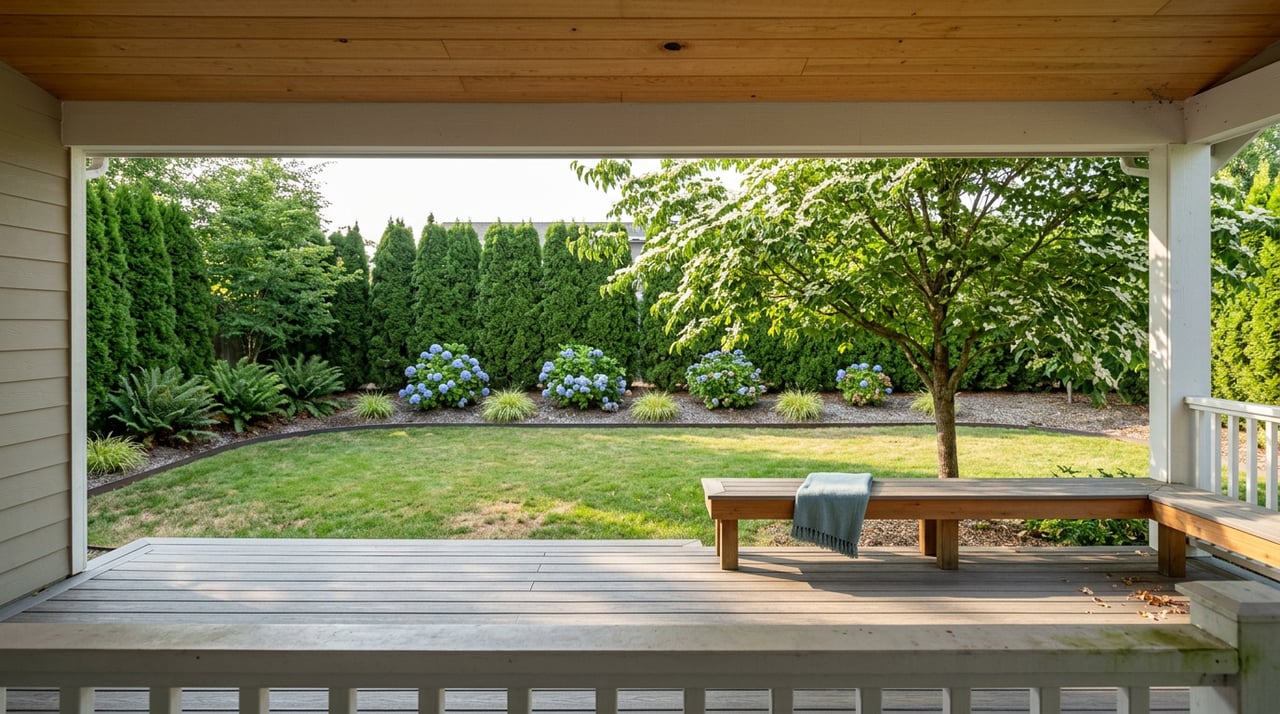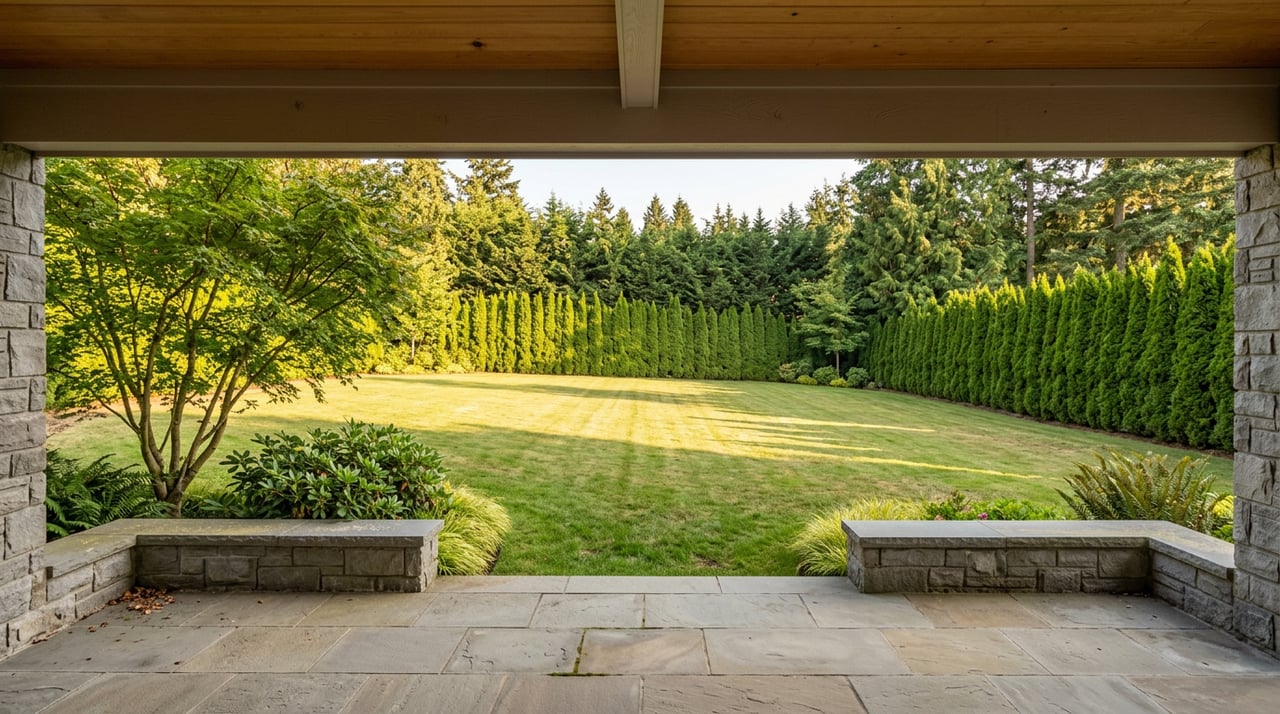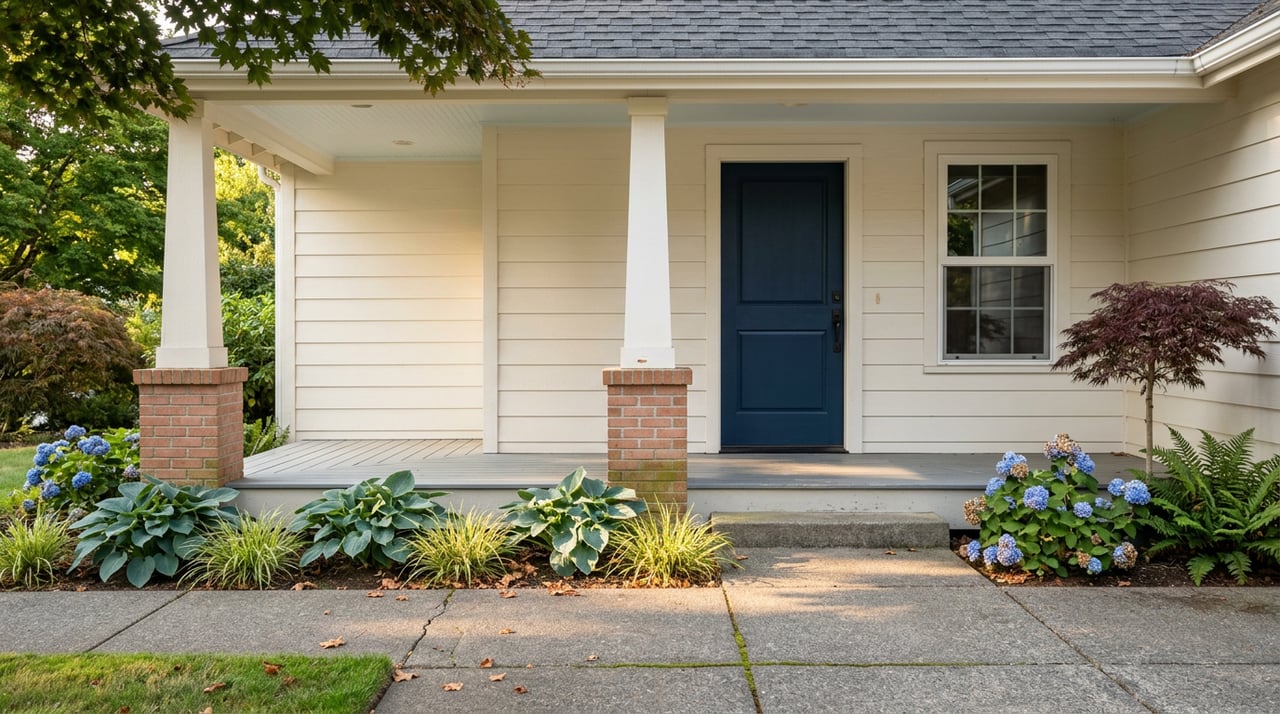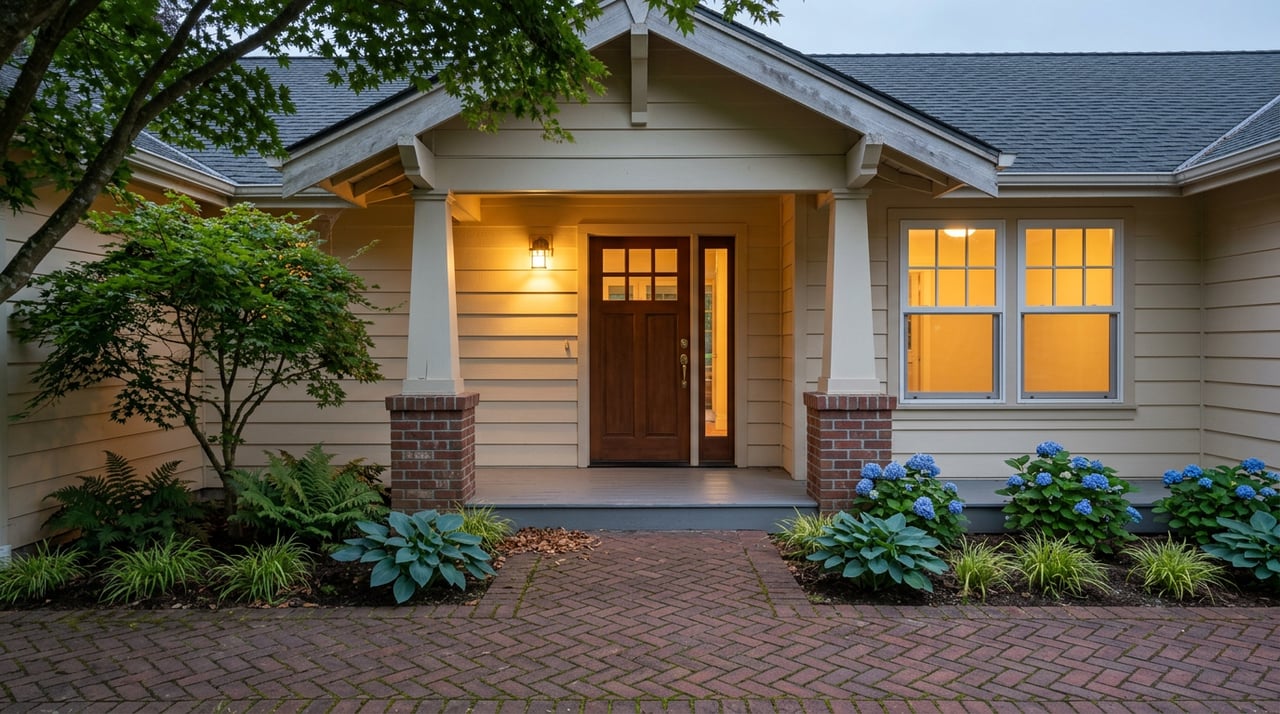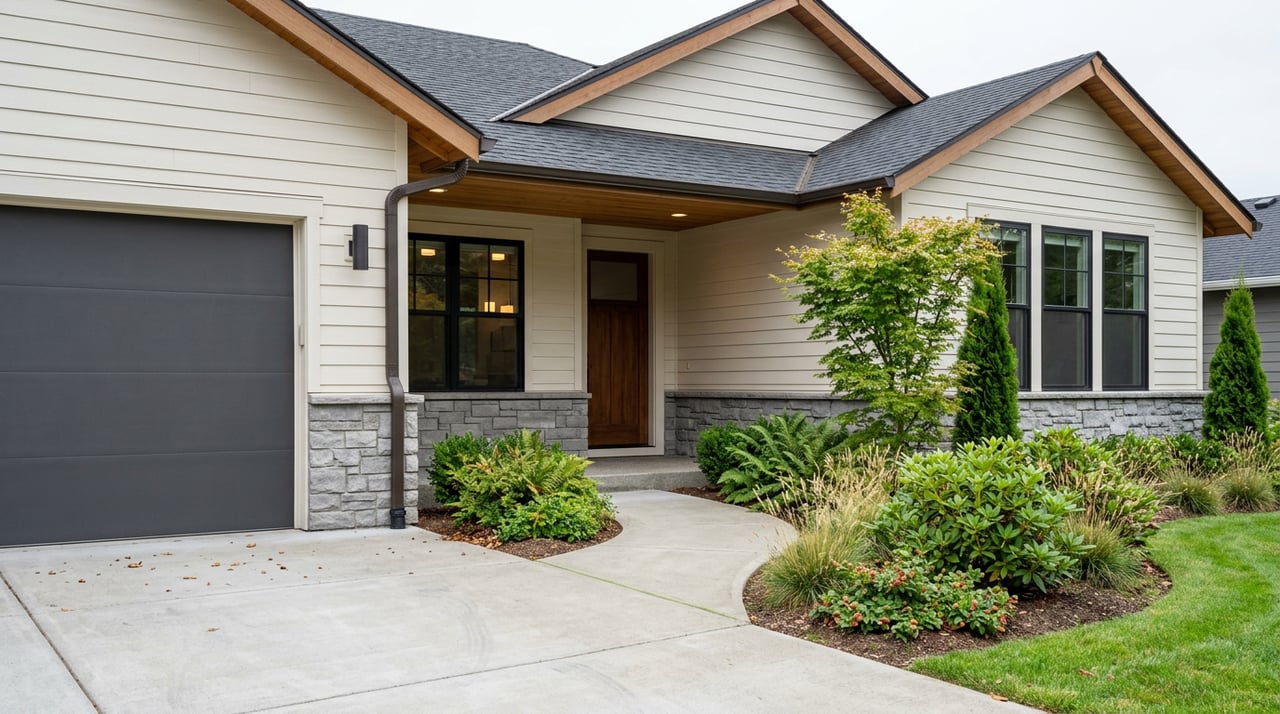
Run two identical searches in Battle Ground at a $650,000 ceiling. One returns a four-bedroom production build in a Daybreak-area subdivision, still smelling of paint, on a lot small enough to mow with an extension cord. The other returns a 1980s ranch on five acres out toward Dollars Corner with a pole barn, a well, and a septic tank the buyer will want inspected twice. Same city. Same budget. Same MLS. Nothing else about them is comparable.
The portals will tell you Battle Ground's median list price sat at roughly $592,000 in June 2026, at about $297 per square foot, with a median 121 days on market. That number is not wrong. It is simply an average of two markets that behave nothing alike, and if you are relocating into Clark County and comparing Battle Ground against Ridgefield or Camas on portal data alone, you are reading a blended chart of two very different products.
This post is about the seam between those two markets, why it matters more than the median, and where the actual competition lives.
The Median That Isn't
Battle Ground grew from roughly 20,867 residents at the 2020 census to about 24,000 by 2026, a 15% jump in six years, with a median household income near $104,977. The city has absorbed that growth by building outward. Suburban production housing has filled in the north and west quadrants near Daybreak School, while acreage and small farmsteads on the unincorporated fringe still dominate the eastern and northern edges. The city holds both inside one ZIP-code halo, and the portals average them together.
Here is what the split actually looks like once you separate the two products.
| Segment | Typical price band | Lot pattern | Where it sits | Typical DOM |
|---|---|---|---|---|
| City-limits new construction | High $400,000s to low $700,000s | Standard suburban, greenbelt edges | Northwest quadrant, Daybreak corridor | 37–55 days when priced correctly |
| Move-up detached, standard lot | $550,000–$750,000 | Under half-acre to half-acre | Central and near-downtown | Multiple offers on the well-priced ones |
| Acreage and small farmstead | $700,000s to $1M+ | 1 to 10 acres, some with shop or barn | Unincorporated Dollars Corner side | 50–68 days, longer if overpriced |
| Estate on 1 to 2.5 acres | $1M+ | Stone and brick, custom | City edges | Highly variable |
A buyer looking for a $650,000 home is not shopping one market. They are choosing between two.
Where the Acreage Premium Actually Comes From
Battle Ground acreage carries a meaningful premium over comparable parcels a few miles further north in Amboy or Yacolt. Buyers pay for proximity. The city sits about 14 to 15 miles north of Vancouver and 24 miles from Portland, with typical drive times of 20 to 25 minutes to Vancouver and 30 to 35 minutes to Portland depending on traffic. That commute envelope is the entire economic argument for the acreage segment. Land is cheaper in Amboy. Time is not.
The five-acre and ten-acre configurations are the two lot sizes buyers ask for most, and they trade differently from suburban stock. Sale-to-list ratios across the market are hovering near 99.5%, but that headline number masks a familiar pattern: correctly-priced acreage moves; acreage priced to 2022 peak comps sits. The city-limits subdivisions, by contrast, compete more directly with new construction inventory, which anchors expectations toward builder pricing and finish quality rather than seller nostalgia.
Named Communities, Named Price Points
If you strip out the acreage segment and look only at what the portals call "typical" Battle Ground, three named communities frame the range.
Walker Field, a New Tradition project south of Daybreak Elementary, is planned for 77 single-family homesites with single-level and two-story plans and greenbelt homesites. Current pricing runs from $529,900 to $710,900. That range is the clearest benchmark for what a new detached home on a standard lot looks like inside city limits.
Amira's Song, a master-planned townhome community in the northwest area, includes more than 100 attached homes across five floor plans with fenced yards, attached garages, and a wooded walking trail. Pricing starts in the mid-$400,000s. For buyers whose alternative is an older resale in the same band, the trade is newer construction and lower exterior maintenance against a smaller footprint and shared walls.
Mountain Valley Estates is the acreage counterpoint inside the city's orbit, with five-acre estate lots and roughly 1.5-acre gated homesites, and floor plans running from three to seven bedrooms. This is where the two markets touch.
The interesting fact about Battle Ground is not the median. It is that the median sits almost exactly between two products that no buyer treats as substitutes.
The Competitive Band Nobody Flags
The most active segment sits between $550,000 and $750,000 for typical single-family homes on standard lots. Well-priced homes inside that band still attract multiple offers even as the citywide DOM number stretches. That is the friction relocating buyers miss most often: the headline "121 days on market" reads as a slow market, and then the specific home they want to bid on has three offers by the second weekend.
The reason is composition. The long-DOM inventory dragging the median up is disproportionately the overpriced acreage, the 1980s ranches waiting for a price cut, and the estates above $1M where the buyer pool is thin. Suburban builder inventory in the competitive band moves closer to the 37 to 55 day pace, sometimes faster.
Friction the Median Cannot Show You
Once you know which market you are in, the transaction-level differences start to matter more than the price:
- Water and septic on the fringe. Acreage parcels frequently carry private well and septic rather than public utilities. That is not a defect. It is a due-diligence line item that does not appear on a standard IDX listing card, and it changes both the inspection scope and the ongoing cost of ownership. Confirm connection status and septic capacity before waiving contingencies.
- Zoning and outbuildings. Shops, barns, and horse facilities inside city limits are governed by Battle Ground municipal code. On the unincorporated side, Clark County zoning applies. Buyers who want to add or expand outbuildings should confirm which jurisdiction the parcel sits inside before writing an offer, because the two rulebooks are not identical.
- Comparable selection. The most common pricing error on the seller side is treating city-limits comps and unincorporated acreage comps as one pool. They are not. A three-bedroom on 0.2 acres near downtown and a three-bedroom on five acres east of the city share a bedroom count and almost nothing else that a buyer values.
- Growth trajectory. Long-range planning for the Battle Ground area calls for roughly 12,000 additional residents and 5,600 jobs, much of it oriented along the Dollars Corner growth corridor. That matters for buyers weighing rural quiet against future development pressure on the eastern edge.
- School district geography. Battle Ground Public Schools serves both segments and includes Battle Ground High, Prairie High, and CAM Academy among roughly 12,700 students. Boundaries do not follow the city limit line, so verify the specific address rather than assuming from the neighborhood name.
What This Changes for a Buyer
The practical instruction is simple. Before you sort listings by price, pick your submarket. If your priority is a newer home, a defined community, and a shorter close, the city-limits builder inventory in the $500,000s and $600,000s is the honest comparison set, and Walker Field or Amira's Song sets the expectation. If your priority is land, a shop, or a hedge against future density, the acreage segment is a different transaction with different diligence and different pricing behavior, and it should be benchmarked against Amboy and Yacolt on the low side and Ridgefield acreage on the high.
Comparing a Battle Ground listing against the citywide median is comparing it against an average of two things it is not.
FAQ
Is Battle Ground a buyer's market or a seller's market in mid-2026? Both, depending on the segment. Citywide sale-to-list ratios near 99.5% and multiple offers on well-priced homes in the $550,000 to $750,000 band point to seller leverage in that band. Longer DOM on overpriced acreage and estate inventory points the other direction above $900,000. The median blends the two.
Why does the price per square foot look softer year over year? The June 2026 figure of about $297 per square foot is roughly 2% below June 2025. Some of that is genuine cooling. Some of it is mix: as more standard-lot new construction closes at builder pricing, the per-square-foot average drifts down even when individual homes are not losing value.
Does the Dollars Corner corridor affect current Battle Ground values? Not yet in a measurable way for existing homes, but it shapes future comparables. Planned growth of roughly 12,000 residents and 5,600 jobs will pull commercial and residential activity east, and acreage owners on that side are effectively holding an option on future rezoning and infrastructure that Amboy and Yacolt owners do not have.
If you are trying to place Battle Ground inside a Clark County shortlist, or you already own here and want a read on which market your home actually sits in, Oxford Street Partners works both segments and can price a specific address against the right comp set rather than the citywide average. Book a consultation and we will walk the numbers with you.